
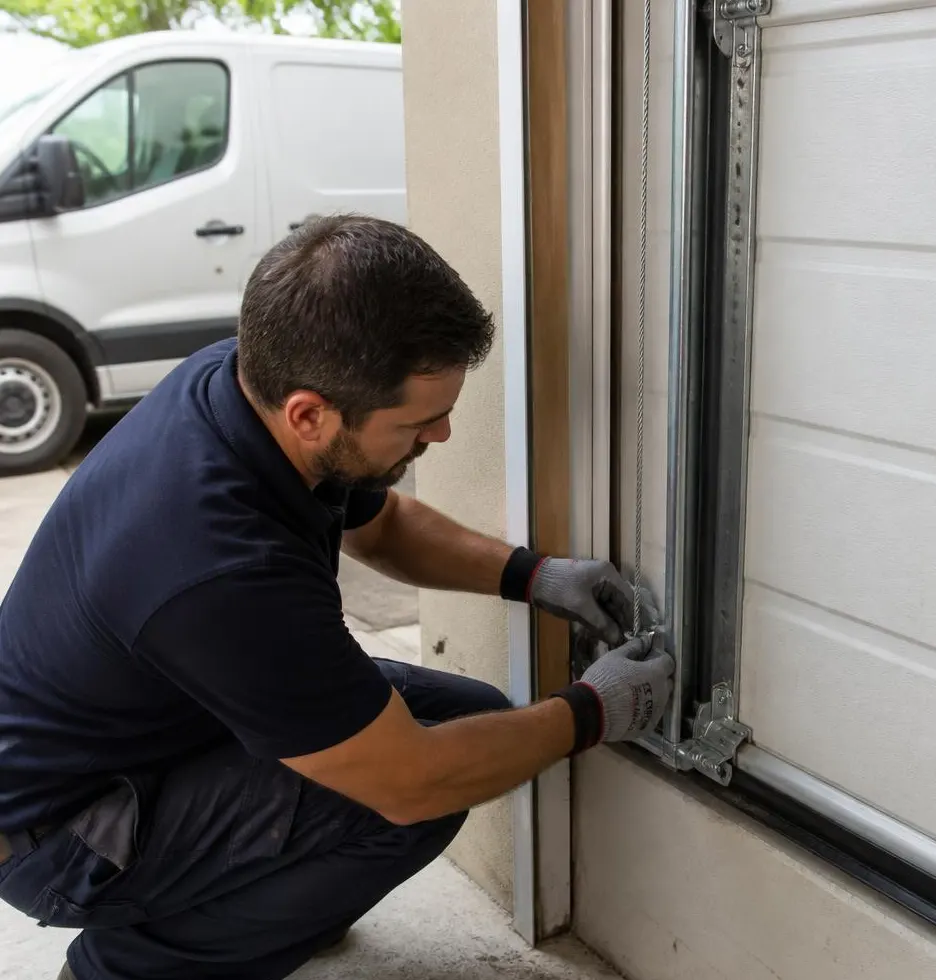
Rule of thumb: for most homes near the coast, a well-insulated steel door is the safest long-term choice because it resists warping and holds up to salt air better than wood or aluminum. The exceptions are older homes where wood matches original architectural details, and budget-focused replacements where aluminum or basic composite can make sense if you accept their trade-offs. There's no single right answer for every house on the South Shore, but the materials behave very differently once winter salt, humidity, and nor'easter wind get involved, so it's worth knowing what you're actually buying.
Steel
Steel is the standard choice for a reason. A quality steel door is typically built in layers: an outer steel skin, a layer of insulation (polystyrene or polyurethane), and often a steel backer. The insulation matters here because it also improves the door's resistance to denting and helps control the condensation that builds up on a cold garage door during a humid South Shore summer.
- Strengths: Handles freeze-thaw cycles without swelling or cracking, resists wind pressure from nor'easters, low maintenance, wide range of styles and price points.
- Weaknesses: If the factory finish gets scratched or chipped, bare steel exposed to road salt spray and melting snow can start to rust, usually first at the bottom panel and the lower corners near the track.
- Climate fit: Very good, provided the finish is kept intact and the bottom weatherstrip is replaced when it hardens or cracks.
Wood
Wood doors, often cedar or hemlock, are the look a lot of the older housing stock around here was originally built with, and they're hard to beat for curb appeal on a Colonial or Cape-style house. The trade-off is that wood is a living material, and it reacts to this climate more than any of the alternatives.
- Strengths: Unmatched custom look, can be refinished rather than replaced, often the right match for original architecture.
- Weaknesses: Humid summers cause swelling that can make panels bind in the tracks; winter cold and dryness from indoor heat can shrink and crack panels on the inside face. Needs repainting or restaining every few years to keep moisture out, especially on a door facing prevailing coastal wind and rain.
- Climate fit: Workable, but only if you're willing to keep up with sealing and refinishing. Skipping maintenance for a season or two is when rot and warping show up.
Aluminum
Aluminum doors are light, which makes them easy on the opener and springs, and they naturally resist rust since there's no steel to corrode. That's appealing near the water. The catch is that the same lightness that resists rust also means less resistance to impact.
- Strengths: Won't rust from salt air or road salt, lighter load on the opener and torsion springs, good for long or oversized openings where weight matters.
- Weaknesses: Dents easily from hail, flying debris during a nor'easter, or a stray basketball, and once a panel is dented it usually can't be hammered back out cleanly the way steel sometimes can. Lower insulation value unless you pay for a heavier, insulated aluminum model.
- Climate fit: Good for rust resistance, weaker for storm durability unless you choose a heavier-gauge product.
Fiberglass
Fiberglass doors are built over a steel or wood frame with a fiberglass skin, often molded to look like wood grain. They're marketed as a coastal-friendly option, and for salt exposure that's largely true.
- Strengths: Resists salt corrosion and won't rot like real wood, holds paint well, good option if you want a wood look without wood maintenance.
- Weaknesses: Fiberglass can become brittle and crack in sustained cold, which matters during a hard New England winter, and faded or yellowed panels are common after years of UV and salt exposure. Repairs to cracked fiberglass are often more involved than a steel panel swap.
- Climate fit: Decent for salt resistance, more questionable for repeated deep-freeze stretches.
Composite / Composite-Wood
Composite doors use engineered wood-fiber composite over a steel frame, aiming for the wood look with better dimensional stability. Think of it as a middle ground between real wood and steel.
- Strengths: Resists swelling and cracking better than solid wood, doesn't rust, usually comes pre-finished so there's less upkeep than real wood.
- Weaknesses: Generally costs more than basic steel, and quality varies a lot between manufacturers, so it's worth checking what the composite skin is actually bonded to before buying.
- Climate fit: Good all-around performer for coastal humidity and freeze-thaw, as long as you buy a reputable product rather than the cheapest composite option.
Which Material Fits a Typical South Shore Home
For most houses here, dealing with salty winter air, freeze-thaw cycles, humid summers, and the occasional nor'easter, an insulated steel door with a factory baked-on finish is the most practical choice. It handles temperature swings without warping, shrugs off wind-driven debris better than aluminum, and doesn't demand the seasonal upkeep that wood does. If you're restoring an older home and want to preserve its original character, a well-sealed wood door can still be the right call, just budget for refinishing every few years. If rust resistance near the water is your top priority and you don't mind a lighter-duty door, a heavier-gauge insulated aluminum model is worth a look. Composite is a reasonable upgrade if you want the wood look with less maintenance and the budget allows for it.
When to Call Hull Garage Door
If your current door is rusting at the bottom panel, sticking in its tracks after a humid stretch, or showing storm damage from flying debris, it's worth having it looked at before a hard winter sets in. Hull Garage Door handles Garage Door Installation for homeowners weighing these material trade-offs, and we'll talk through what actually fits your house and exposure rather than pushing one product. We also offer Garage Door Maintenance to catch rust spots, worn weatherstripping, and hardening seals early, before freeze-thaw cycles turn a small issue into a full panel replacement.
If you're in Hull, Hingham, Cohasset, Weymouth, Scituate, Norwell, Rockland, or Marshfield and you're deciding between repairing an aging door or replacing it with something built for this coastline, give Hull Garage Door a call. We're based right on Nantasket Ave and happy to take a look.